Key Takeaways
- Accessible for all skill levels: The kalimba thumb piano is beginner-friendly and easy to learn.
- Rich cultural heritage: Originating from Africa, the instrument carries unique historical significance.
- Variety of styles: Wooden and acrylic kalimbas accommodate diverse sound preferences and uses.
What is a Kalimba?
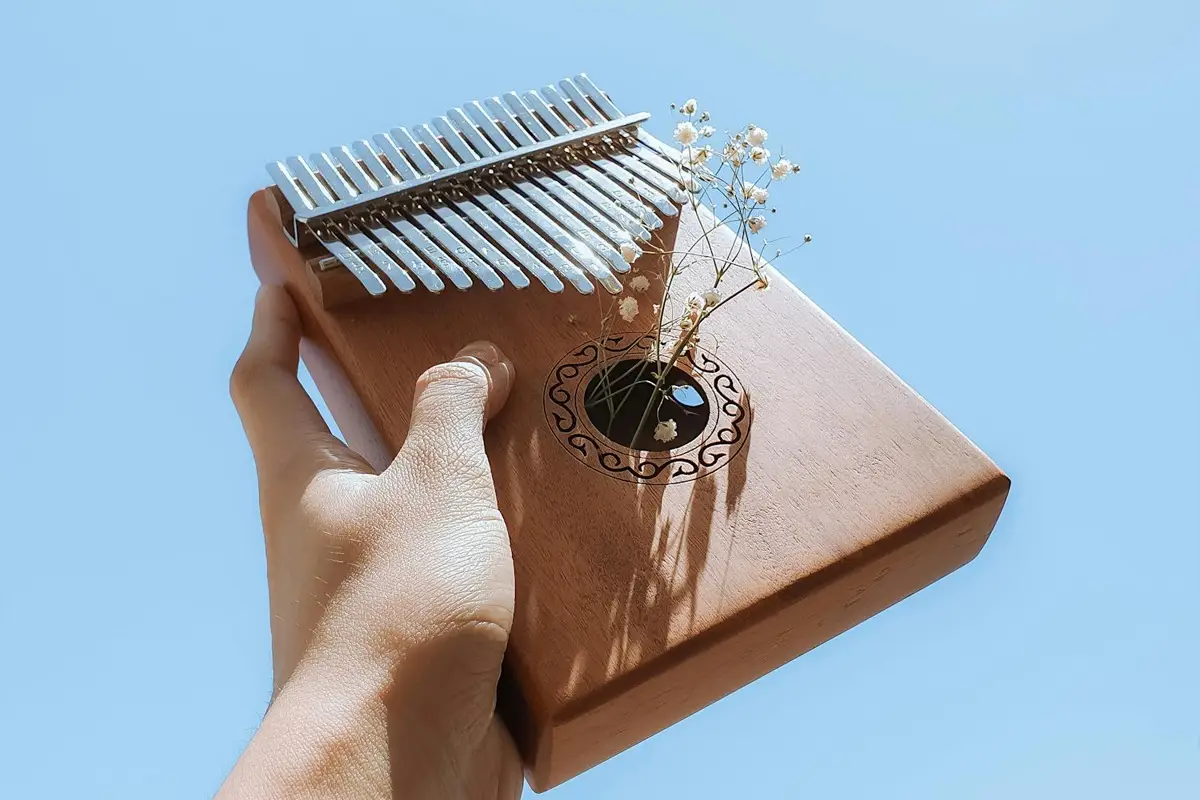
The kalimba, also known as the thumb piano, is a modern adaptation of the African mbira instrument. This cultural gem features metal tines mounted on a soundboard, producing soothing tones when plucked.
Traditional Roots
Kalimba has deep ties to African heritage, appearing in ceremonies and communal gatherings under names like mbira, likembe, and sanza.
Modern Design
Modern versions feature between 5 and 21 keys, with the 17-key setup being most common. The soundboard can be wooden, acrylic, or occasionally gourd-based, offering unique tonal characteristics.
Benefits of Learning Kalimba
The kalimba instrument provides an accessible introduction to music for new players while offering rich possibilities for seasoned musicians.
Beginner-Friendly
Its intuitive note arrangement and simple plucking motion allow users to produce harmonious sounds with minimal effort.
Portable & Affordable
The compact size means you can practice anywhere, and affordable pricing removes entry barriers for most budget-conscious musicians.
Emotional Expression
Its soothing tones serve as a therapeutic and relaxing musical outlet for personal expression.
Wooden vs Acrylic Kalimbas
Understanding the differences between wooden and acrylic kalimbas is key to selecting the right instrument for your needs.
Wooden Kalimbas
Known for their natural resonance and warm tones, wooden kalimbas excel in acoustic environments and offer a traditional playing experience.
Acrylic Kalimbas
Bright, crystalline sounds and visual appeal make acrylic kalimbas ideal for amplified settings and contemporary styles. They also boast increased durability.
Visit this guide for more insights into choosing between the two styles.
Exploring Chromatic Kalimbas
Chromatic kalimbas expand the instrument’s capabilities, offering all semitones for a complete chromatic scale.
Advanced Features
These models include both sharps and flats, allowing players to perform complex compositions and adapt to different keys.
Ideal for Experienced Players
While offering exciting possibilities for advanced musicians, beginners might find chromatic kalimbas more challenging than diatonic styles.
Frequently Asked Questions
Q: How many keys should a beginner kalimba have?
A: A 17-key kalimba is ideal for beginners as it provides a broad range of notes without overwhelming complexity.
Q: Can I play the kalimba without learning music theory?
A: Yes, the kalimba’s intuitive layout allows users to play simple melodies with minimal prior knowledge of music theory.
Q: Which type of kalimba is best for therapeutic purposes?
A: Wooden kalimbas are recommended for their warm, soothing tones, making them ideal for relaxation and emotional expression.
Q: How do I maintain my kalimba?
A: Regularly clean the tines with a soft cloth, store it in a protective case, and use a tuning hammer to keep the instrument in tune.